
Vegetarian
Vegetarian at a Korean restaurant: what to ask about
Most of what determines whether a Korean dish works for vegetarians is not printed on the menu. Here is what is usually in there, and how to ask about it without an interrogation.
What catches people out
- Anchovy or beef stock in stews
- Doenjang jjigae reads as bean paste, tofu and courgette, and is very frequently built on dried anchovy or beef.
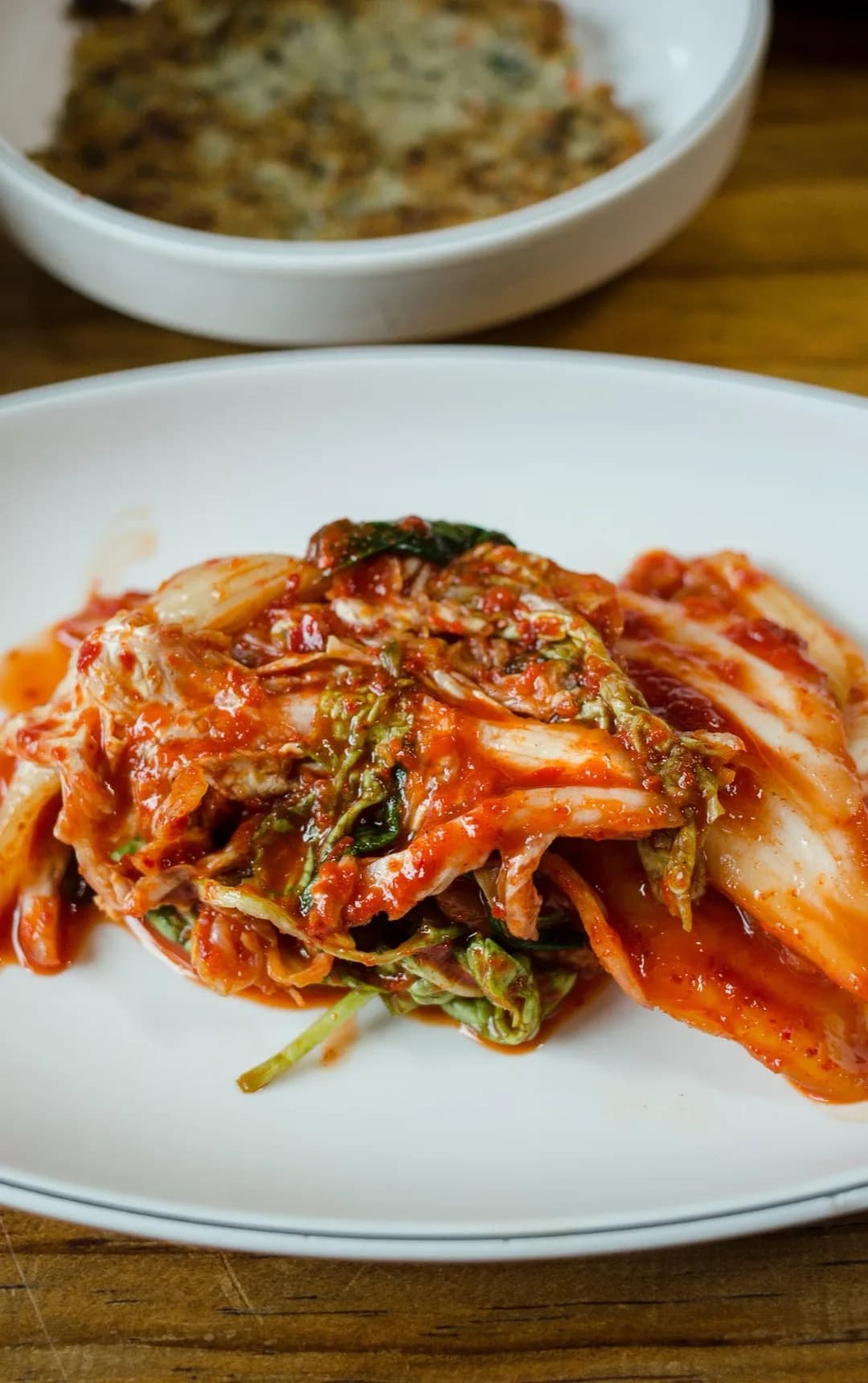
- Kimchi
- Usually fermented with salted shrimp or anchovy sauce, and it turns up as a base ingredient rather than a garnish.
- The free side dishes
- Banchan arrive without a description, and stir-fried dried anchovies and fish cake are two of the most common ones.
Usually a good starting point
Korean Buddhist cooking, meat-free by construction and made without fish stock. A far stronger signal than a 'V' on a menu, and worth seeking out as a restaurant category in its own right.
A spring onion pancake of flour, egg and greens — though the seafood version is equally common, so it is worth naming which one you want.
The vegetable version, ordered without the meat and egg. The soup that arrives alongside is the part worth asking about.
What to actually say
One specific question is easier for everyone than three vague ones — for you and for the person answering.
- “Is the broth made with anchovy or beef?”
- “Does the kimchi have fish sauce or salted shrimp in it?”
- “Which of the side dishes have fish in them?”
What Korean menus don’t print
Nobody is hiding anything. These are foundational ingredients that a Korean kitchen treats the way you treat salt — not an ingredient, a medium. That is exactly why they never appear in a description.
Under most stews, soups and noodle broths, and in the sauce for tteokbokki. It is the base layer of Korean savoury cooking, so a dish of vegetables in broth is frequently built on dried fish.
Kimchi is commonly fermented with one or both. That carries into everything kimchi goes into — kimchi jjigae, kimchi fried rice, kimchi pancake — where it reads as a vegetable.
Many clear soups, the broth of tteokguk, and a great many dishes that read as bean paste and vegetables.
Commercial gochujang is commonly made with wheat flour or malted barley, and most soy sauce is brewed with wheat. Both surprise people who assume chilli paste means chilli.
Bulgogi and galbi marinades, where Korean pear is used as a tenderiser. It is most of the reason the meat tastes faintly sweet.
Recipes vary between restaurants and change without notice, so treat all of this as what to raise with the kitchen rather than a guarantee about any particular dish. The staff always have the final word.
TableSage reads menus using an AI language model, which gets things wrong sometimes.
Know which dishes to ask about.
Photograph the menu and it flags what is worth raising — including the ingredients that are never printed.