
Photograph the menu. All of it.
One page or ten, printed or handwritten, in any language, in the light restaurants actually have.
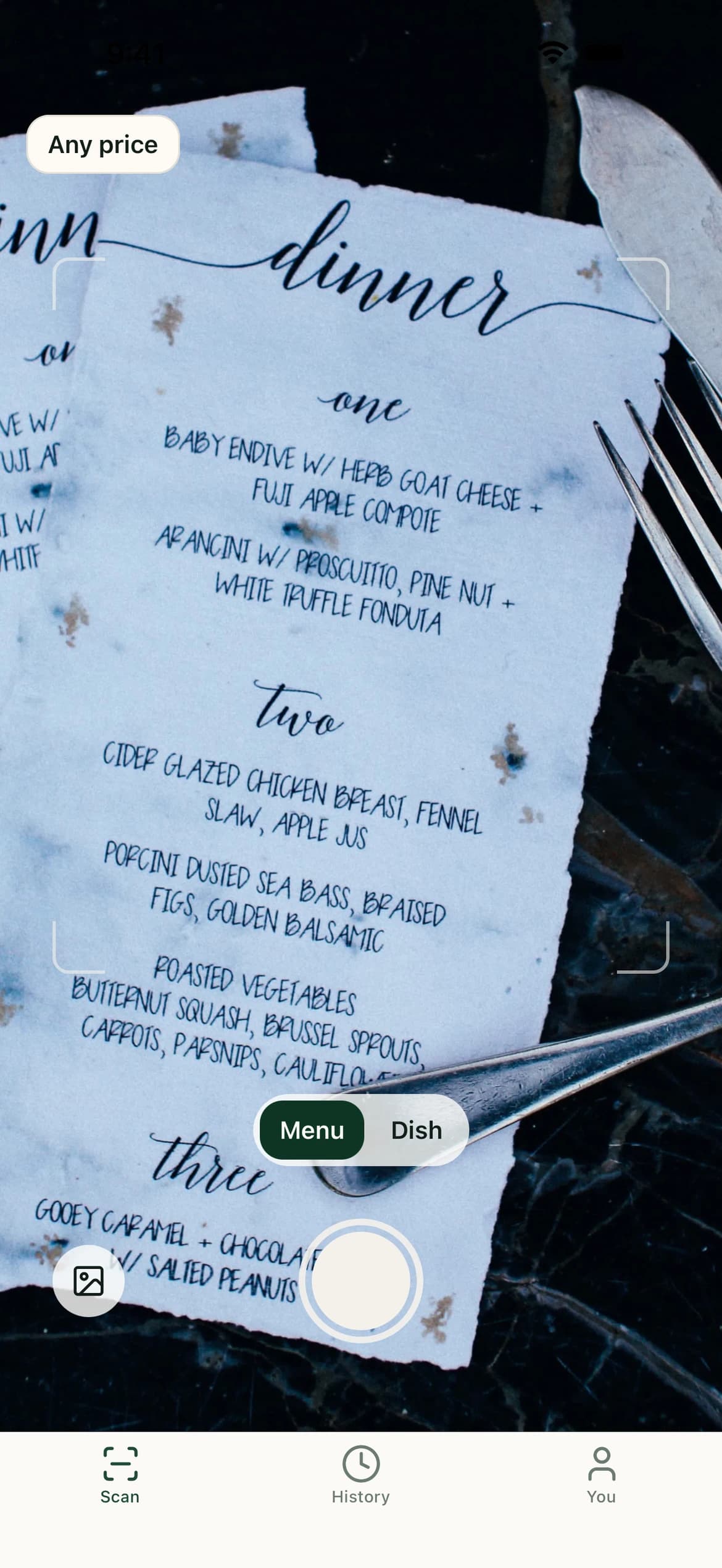
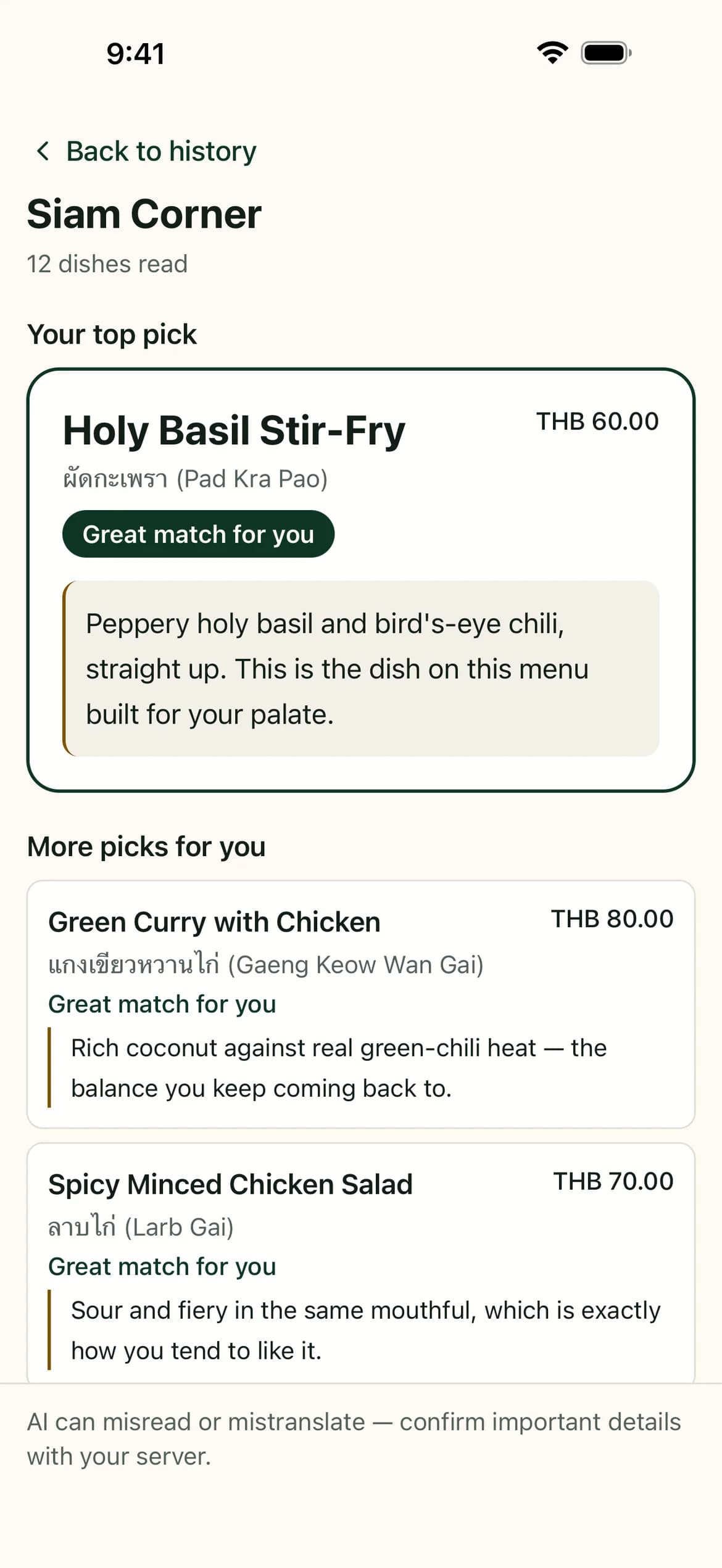
Menus are hostile input. Multiple columns, decorative type, lamination that throws glare, a specials board in handwriting, and a photograph taken at an angle because you are sitting down.
Multi-page menus in one go
Add pages as you photograph them and they are read together, so a dish on page four is ranked against everything on page one. Splitting a menu into separate scans loses exactly the comparison you wanted.
A single dish, if that's all you need
Pointing it at one dish — on a menu, or on a plate in front of you — answers the narrower question of what this actually is and whether it suits you.
Sections come through
Real menus are grouped — primi, curries, yakimono — and that grouping is genuinely useful information, so it survives into the results rather than being flattened into one long list.