
How to read a menu
How to read a Japanese menu
You are standing in front of a menu with no pictures and no English, and someone is waiting. This is about that moment.
What actually makes it difficult
Menus mix three writing systems — kanji, hiragana and katakana — and izakaya menus are frequently handwritten on wooden strips with no prices and no English. Katakana is worth learning first because it spells out foreign words phonetically, so it often yields the answer directly.
Eliminate sections before you read dishes
Japanese menus are grouped by how the food is cooked, and that grouping does most of the work for you. Ruling out a whole section is faster than reading twenty dish names.
Straightforward and usually the easiest section to order from.
Tempura and karaage live here. Familiar textures.
Built on dashi, which is where the fish hides.
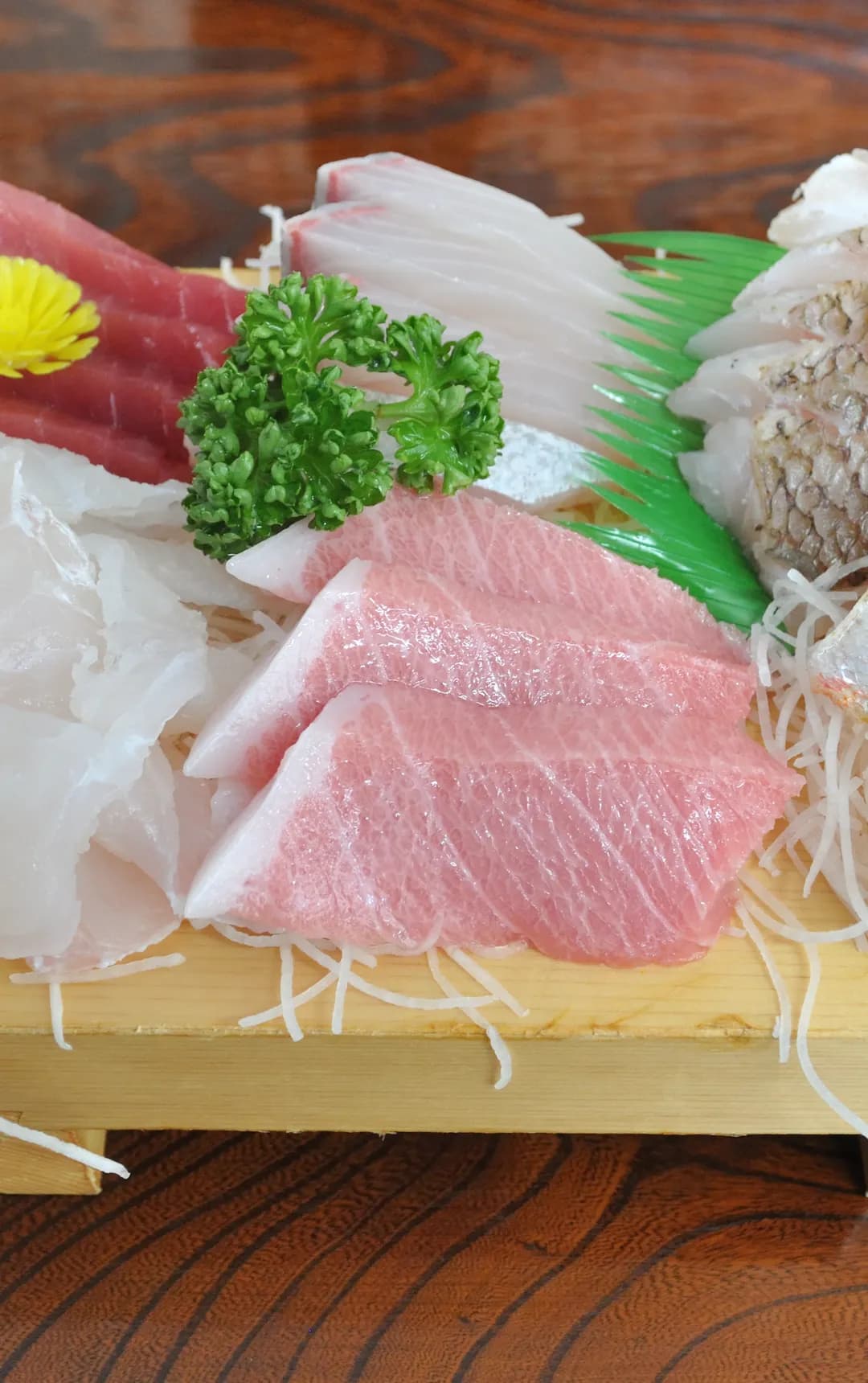
Sliced raw fish. The texture, not the flavour, is what people react to.
Sharp and often slippery — skip the whole section if that is your issue.
Words worth recognising
Not a phrasebook. Five things that change what you order.
grilled
fried
simmered — expect dashi
the bonito stock underneath most savoury dishes
meat
Translation is not interpretation
A translator converts words, which sounds like the job and is not. The output is frequently correct and useless at the same time.
親子丼
Translated word-for-word: “parent-and-child bowl”
Chicken and egg over rice. The name is a joke about the pairing, not a description of the dish.
What Japanese menus don’t print
Nobody is hiding anything. These are foundational ingredients that a Japanese kitchen treats the way you treat salt — not an ingredient, a medium. That is exactly why they never appear in a description.
Most simmered dishes, miso soup, and many dipping sauces. It is usually made with katsuobushi (dried bonito), so 'vegetable' dishes are frequently not vegetarian.
A great many glazes and sauces, including teriyaki.
Nearly everything, and most varieties contain wheat.
Sprinkled on okonomiyaki and takoyaki, sometimes invisibly folded into fillings.
Recipes vary between restaurants and change without notice, so treat all of this as what to raise with the kitchen rather than a guarantee about any particular dish. The staff always have the final word.
TableSage reads menus using an AI language model, which gets things wrong sometimes.
Or photograph it and skip the alphabet.
TableSage reads the menu in front of you and tells you what each dish actually is.