
What to order
What to order at a American restaurant as a picky eater
American food has a reputation that puts people off before they have read a menu. Some of that reputation is earned, and most of it applies to a section you can simply skip.
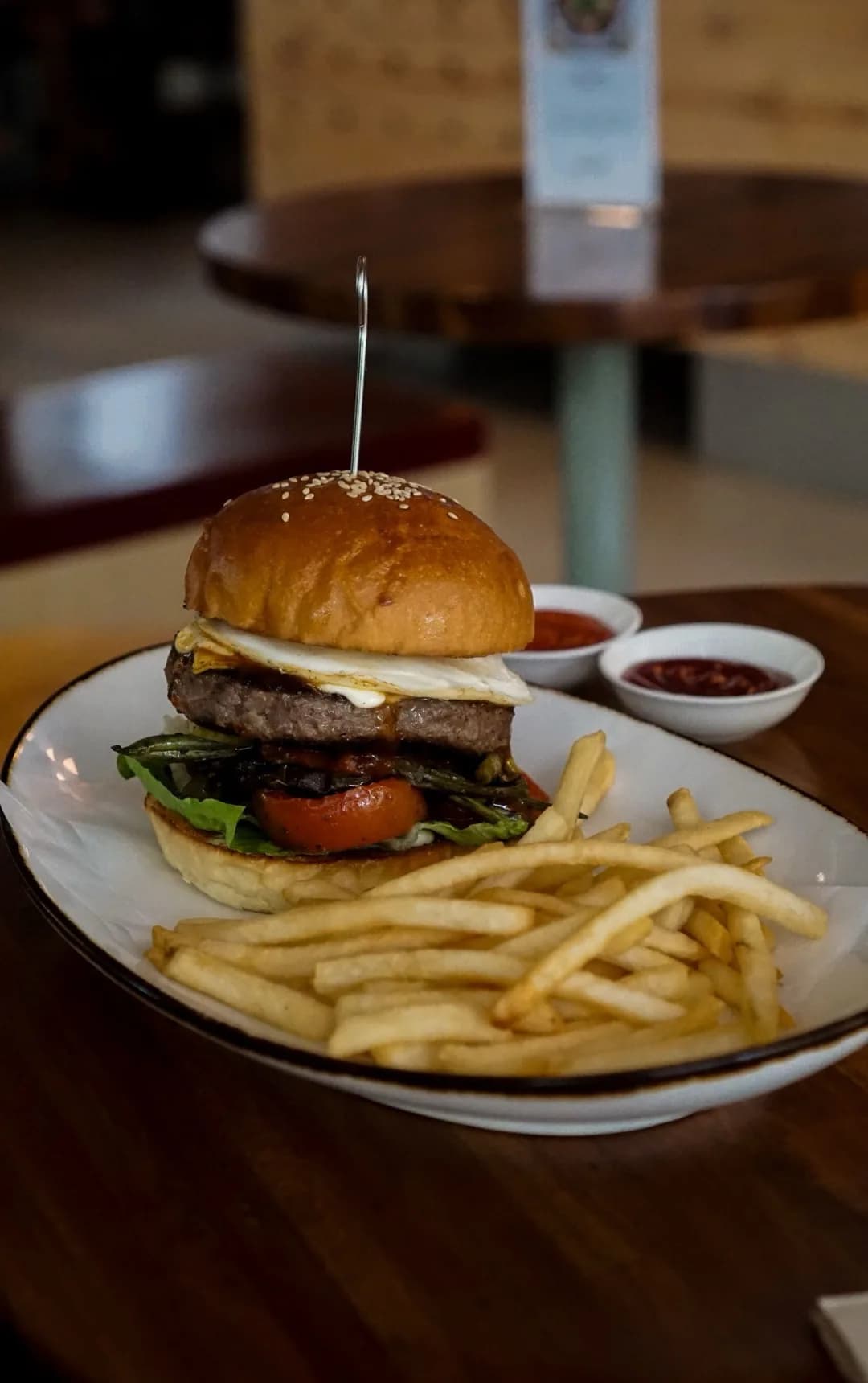
Eliminate sections before you read dishes
American menus are grouped by how the food is cooked, and that grouping does most of the work for you. Ruling out a whole section is faster than reading twenty dish names.
Grouped by how they are served rather than by what they are. Portioned for a table, usually fried, and frequently the size of a main course elsewhere.
The least predictable section for anyone avoiding richness. Cheese, bacon, croutons and a creamy dressing are usually part of the dish rather than optional extras, and the dressing arrives on the salad unless you say otherwise.
Each comes with a side you choose, and that choice is where the meal is actually decided. This section is also where substitution is most expected — asking for things left off is routine, not awkward.
A protein with one or two sides, usually listed after it in smaller type. Unlike an Italian secondo, the vegetables are normally included rather than ordered separately.
Ordered separately or swapped into a plate. Worth reading even if you are not ordering from it, because it tells you what the kitchen actually keeps on hand.
Often served all day, and effectively a second menu with its own logic. It is also where the sweet-and-savoury combinations live, which surprises people who did not expect syrup next to bacon.
Reliable starting points
The dish is not the point here — the ordering culture is. American kitchens genuinely expect modification, so asking for it with nothing on it is a normal request rather than a difficult one.
Bread, cheese and a griddle. Three components, all visible, and nothing added at the end except more butter.
Pasta in a cheese sauce, mild by construction and served hot and soft. The baked version has a crumb topping; the stovetop version does not, and it is worth knowing which you are getting.
Plainly cooked and plainly described. The gravy is the only unknown, and it arrives in a jug often enough that you can leave it.
If you want to stretch slightly
Biscuits and gravy
The name misleads twice. The biscuit is a soft, savoury scone, not a sweet one, and the gravy is a white peppery cream sauce with sausage in it rather than the brown meat gravy the word suggests. If you like a creamy sauce over bread, this is that — the only thing standing between you and it is the vocabulary.
A dish that shares most of its properties with something you already enjoy, and differs in one, lands far more often than a leap does.
What American menus don’t print
Nobody is hiding anything. These are foundational ingredients that a American kitchen treats the way you treat salt — not an ingredient, a medium. That is exactly why they never appear in a description.
Soft drinks, obviously, but also barbecue sauce, ketchup, salad dressings, burger buns, breakfast cereals and cured meats. It is the reason so many savoury American dishes read as faintly sweet to visitors who were not expecting it.
The marinade under fried chicken, the ranch dressing on everything, and the biscuits, pancakes and cornbread. Dairy in a great many places where the menu describes no dairy at all.
Southern vegetable sides in particular — collard greens, green beans, baked beans, cornbread and hash browns are frequently started in it, or cooked with a ham hock. The vegetables are often the least vegetarian thing on the plate.
In the classic Caesar dressing, and in Worcestershire sauce — which then turns up in meatloaf, burger seasoning, gravies, barbecue sauces, cocktail sauce and a great many marinades. One ingredient, an enormous footprint, and it is essentially never printed.
Steaks basted or finished with it, vegetables tossed in it, toast and buns griddled in it, mashed potato built on it. It is applied after the dish description was written.
Recipes vary between restaurants and change without notice, so treat all of this as what to raise with the kitchen rather than a guarantee about any particular dish. The staff always have the final word.
TableSage reads menus using an AI language model, which gets things wrong sometimes.
Point it at the menu instead.
TableSage reads every dish on a American menu — including the parts that aren't printed — and tells you which ones suit you.