
Vegetarian
Vegetarian at a Indian restaurant: what to ask about
Most of what determines whether a Indian dish works for vegetarians is not printed on the menu. Here is what is usually in there, and how to ask about it without an interrogation.
What catches people out
- Ghee
- It is dairy, not meat, so it is fine for most vegetarians — but worth knowing it is there if you thought a dish was oil-cooked.
- Shared fryers
- Vegetable pakora frequently comes out of the same oil as the fish.

Usually a good starting point
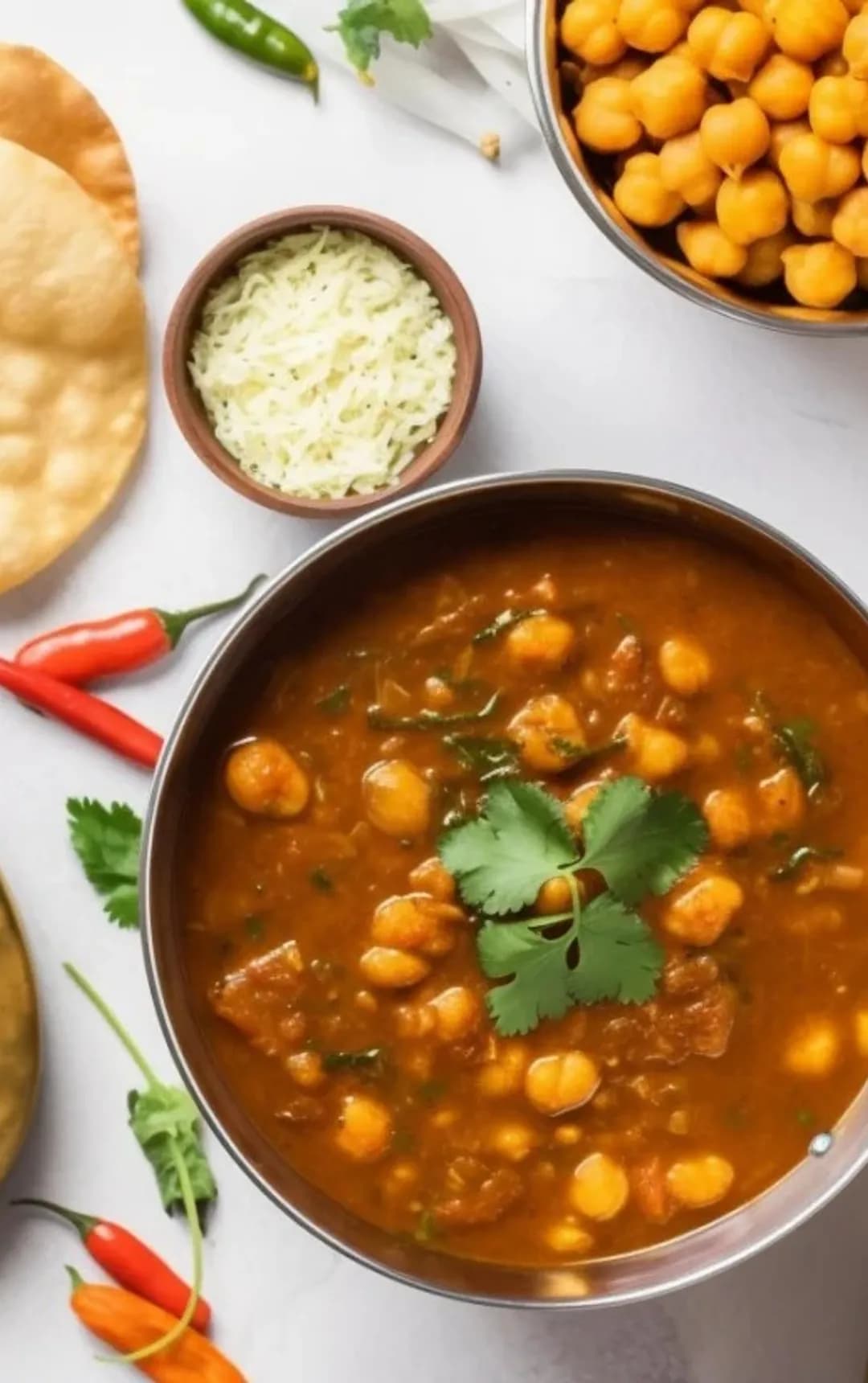
Chickpeas in a tomato base. A staple, and vegetarian by construction.
Spinach and fresh cheese — one of the most reliable vegetarian orders anywhere.
Lentils, in a hundred regional forms, almost all of them vegetarian.
What to actually say
One specific question is easier for everyone than three vague ones — for you and for the person answering.
- “Is this cooked in ghee or oil?”
- “Is the fryer shared with meat or fish?”
What Indian menus don’t print
Nobody is hiding anything. These are foundational ingredients that a Indian kitchen treats the way you treat salt — not an ingredient, a medium. That is exactly why they never appear in a description.
Clarified butter, used as the cooking fat in a great many dishes including ones that read as dairy-free.
Korma, butter chicken and most tandoori marinades. Richness is usually dairy.
Thickens many pale, creamy curries — a genuine surprise for anyone avoiding nuts.
A common seasoning, and commercial versions are usually cut with wheat flour.
Recipes vary between restaurants and change without notice, so treat all of this as what to raise with the kitchen rather than a guarantee about any particular dish. The staff always have the final word.
TableSage reads menus using an AI language model, which gets things wrong sometimes.
Know which dishes to ask about.
Photograph the menu and it flags what is worth raising — including the ingredients that are never printed.