
What to order
What to order at a Middle Eastern restaurant as a picky eater
Middle Eastern food has a reputation that puts people off before they have read a menu. Some of that reputation is earned, and most of it applies to a section you can simply skip.
Eliminate sections before you read dishes
Middle Eastern menus are grouped by how the food is cooked, and that grouping does most of the work for you. Ruling out a whole section is faster than reading twenty dish names.
The heart of the meal rather than a starter. Many menus split it into cold and hot; the expectation is that you order several and share them, not that you pick one.
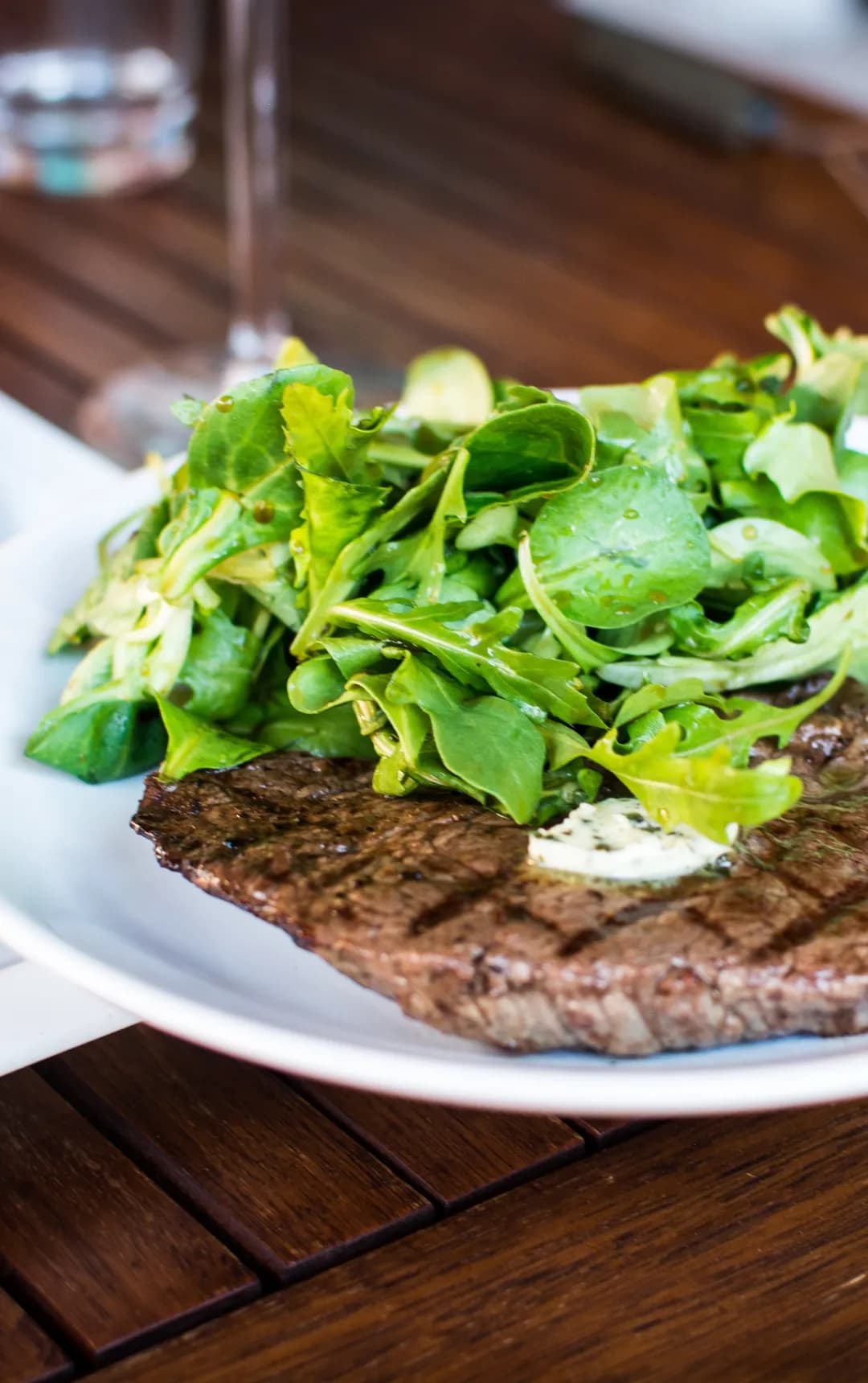
Ordered by cut and by skewer. The plainest cooking on the menu, and the section to head for if you want to see what you are eating.
Dough baked with za'atar, cheese or minced lamb on top. A bakery and breakfast item that has migrated onto restaurant menus, so it often sits oddly between the starters and the mains.
Where the slow-cooked dishes live — maqluba, kabsa, stuffed vegetables. Usually one large plate to be shared rather than a course served to one person.
Syrup-soaked pastry and warm cheese desserts. Almost all of them are sweeter than a European dessert, and the syrup is usually scented with orange blossom or rose.
Reliable starting points
Chickpeas, tahini, lemon and garlic, served cool and smooth. No heat, no surprises, and it arrives with bread to eat it with.
Grilled chicken skewers. The marinade is tangy rather than spiced, and grilling is about as legible as cooking gets — you can see the whole dish.
Lentils and rice under a heap of deeply fried onions. Sweet, soft and entirely heat-free — one of the gentlest things on any Levantine menu.
Spit-roasted chicken with garlic sauce and pickles, and the pickles are the only sharp element. You can ask for it without them.
If you want to stretch slightly
Muhammaraمحمرة
A dip in exactly the same format as hummus — spread, bread, share — but made from roasted red pepper and walnuts with pomegranate molasses. Sweet-sour and faintly warm rather than hot. The routine is familiar; only the flavour is new.
A dish that shares most of its properties with something you already enjoy, and differs in one, lands far more often than a leap does.
What Middle Eastern menus don’t print
Nobody is hiding anything. These are foundational ingredients that a Middle Eastern kitchen treats the way you treat salt — not an ingredient, a medium. That is exactly why they never appear in a description.
Far beyond hummus. It thickens the aubergine dips, it is the base of the tarator sauce poured over fish and falafel, it turns up in salad dressings, and it is the main ingredient in halva. Anyone avoiding sesame meets it in places the menu never mentions.
Frequently minced into kofta and kibbeh, and stirred through rice, where it does the work that butter would do elsewhere. It is why the mince tastes richer than beef mince usually does.
Muhammara, fattoush dressing and several braises. It reads as a sour-sweet depth rather than as fruit, so people rarely identify it.
Shish taouk is usually marinated in yoghurt with garlic and lemon, and the yoghurt cooks away — so a grilled chicken skewer that looks entirely dairy-free frequently is not.
The traditional cooking fat for rice, pastry and many stews. Restaurants vary — plenty use oil — which makes it a question rather than an assumption.
Recipes vary between restaurants and change without notice, so treat all of this as what to raise with the kitchen rather than a guarantee about any particular dish. The staff always have the final word.
TableSage reads menus using an AI language model, which gets things wrong sometimes.
Point it at the menu instead.
TableSage reads every dish on a Middle Eastern menu — including the parts that aren't printed — and tells you which ones suit you.