The menu is nine pages, laminated, and organised in a way you cannot see. There is a section of things you recognise and six sections of things you do not. The word "curry" appears exactly nowhere, which is disorienting if that is the word you arrived with.
That absence is the first useful fact.
"Curry" is an English word
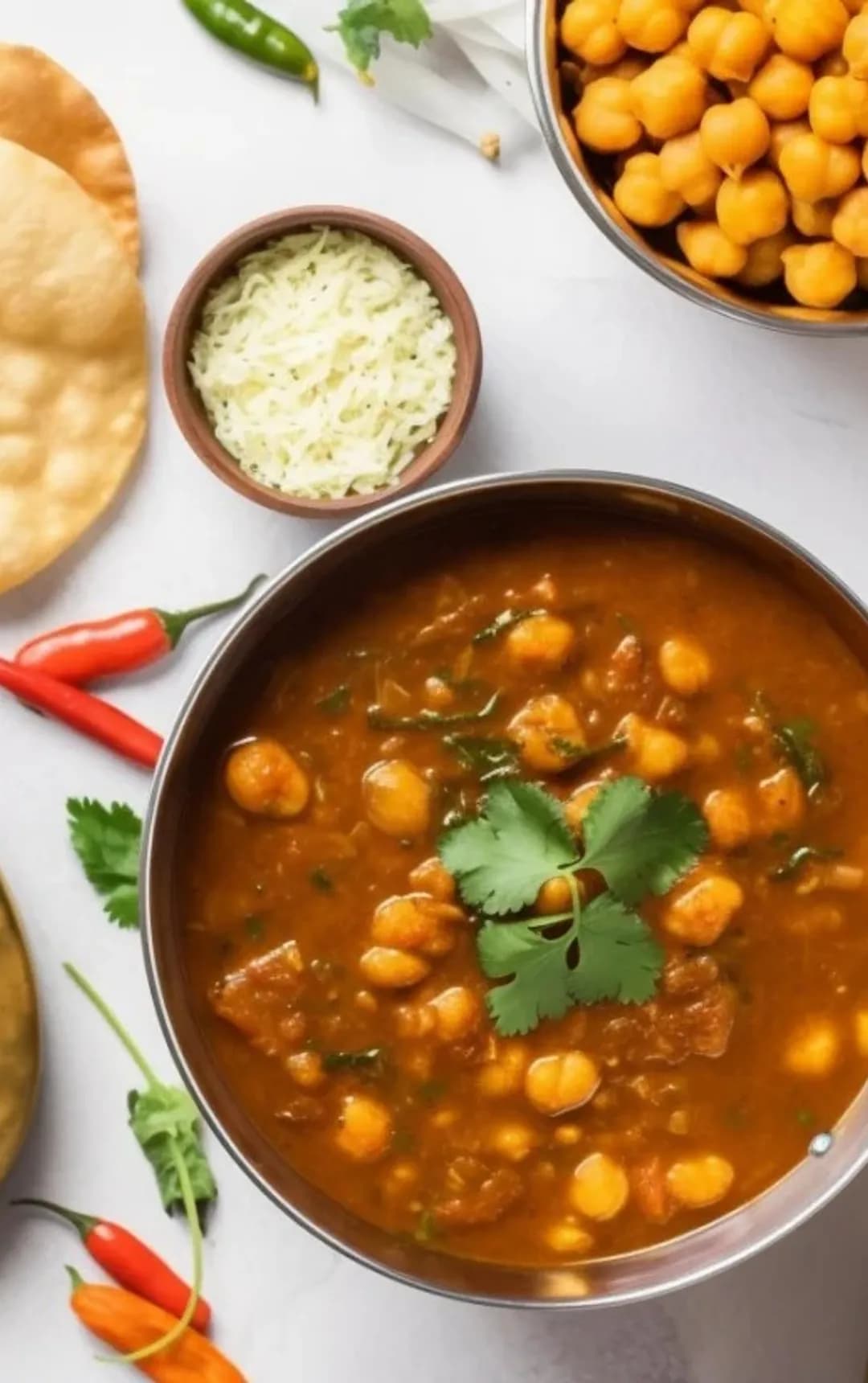
Indian menus name dishes individually — dal tadka, rogan josh, chana masala, avial, korma — because those dishes have nothing much in common beyond being cooked in a pan. The English catch-all, probably descended from the Tamil kari, flattens a hundred different things into one, and it is the reason people arrive expecting a single flavour and get confused.
While we are here: masala means a spice blend, not a dish, and tandoori describes an oven, not a recipe.
The country splits, and so does the menu
- North — wheat breads, dairy, ghee, the tandoor. Thick, rich gravies. Butter chicken and korma live here.
- South — rice, coconut, tamarind, curry leaves, mustard seed. Dosa, idli and sambar are breakfast staples, not starters, and a full meal is frequently served on a banana leaf.
- East and Bengal — mustard oil, freshwater fish, and panch phoron, a five-seed blend used whole rather than ground.
- West — Gujarati thalis that run slightly sweet, and Goan cooking with vinegar and pork, a genuine Portuguese inheritance. Vindaloo comes from carne de vinha d'alhos — meat in wine or vinegar with garlic. The "aloo" is a coincidence; there is no potato in the original.
A restaurant is nearly always cooking one of these traditions, not all of them. If the menu tries to cover everything, it is cooking for tourists.
Veg and non-veg is a structural division, not a preference
This is the part that surprises visitors most. Indian menus are frequently divided into veg and non-veg as top-level sections, many restaurants advertise themselves as pure veg and have no meat on the premises at all, and packaged food carries a green mark for vegetarian and a brown one for non-vegetarian.
Vegetarianism here is a mainstream default with its own deep repertoire, not a subtraction from a meat dish. If you eat meat, the practical consequence is that some of the best food you will eat has none in it. If you do not, India is easier than almost anywhere — with two caveats below. Our dietary guide goes further.
The fat nobody prints
Ghee — clarified butter — is the cooking fat in an enormous number of dishes, including ones that read as though they were made with oil. It is dairy rather than meat, so it is fine for most vegetarians, but it matters a great deal if you avoid dairy.
Three more that hide:
- Cashew paste thickens most pale, creamy curries. This is a real surprise for anyone avoiding nuts, because nothing about a korma announces it.
- Cream and yoghurt are where richness comes from. Nearly all tandoori marinades are yoghurt-based.
- Asafoetida (hing), a common seasoning, is usually sold cut with wheat flour.
Also worth knowing: naan is typically made with yoghurt or milk, while roti and chapati are usually just flour, water and salt.
A thali is the answer to "I don't know what to order"
A thali is a metal tray with rice or bread in the middle and small bowls — katori — around it: a dal, a vegetable or two, a yoghurt, a pickle, something sweet. It is a complete meal assembled by the kitchen rather than by you, at a fixed price, and in a great many places the dal, rice and vegetables are refilled until you stop them.
If you are standing in front of an unreadable menu with no idea where to start, a thali is the single best decision available. It also introduces you to five things at once, which is a faster education than ordering one dish.
One more term worth recognising: Jain food is cooked without onion, garlic or any root vegetable, so a Jain menu is a stricter thing again than a vegetarian one.
On heat
Rogan josh is red because of Kashmiri chilli, which is used for colour and is mild. Heat in India is regional and specific rather than uniformly high — Andhra and Kerala cooking runs hot; Gujarati and much of Punjabi cooking does not. The picky eater guide to Indian menus covers the gentle end in detail, and vegetarian at an Indian restaurant covers the rest.
Where TableSage fits
TableSage reads a photographed menu and flags what is likely in each dish — including the ghee, the cashew and the yoghurt that no menu mentions — then narrows the page to what matches the tastes you set up.
It never calls a dish safe. Recipes vary between kitchens and change without notice, so the staff have the final word — but you will know what to ask.