You sit down in Seoul, order one thing, and eight small dishes arrive before it does. Nobody explains them. Nobody charges for them. There is a reasonable chance you spend the next ten minutes wondering whether you have been given somebody else's order.
You have not. This is how a Korean table works.
Banchan are free, refillable, and not a starter
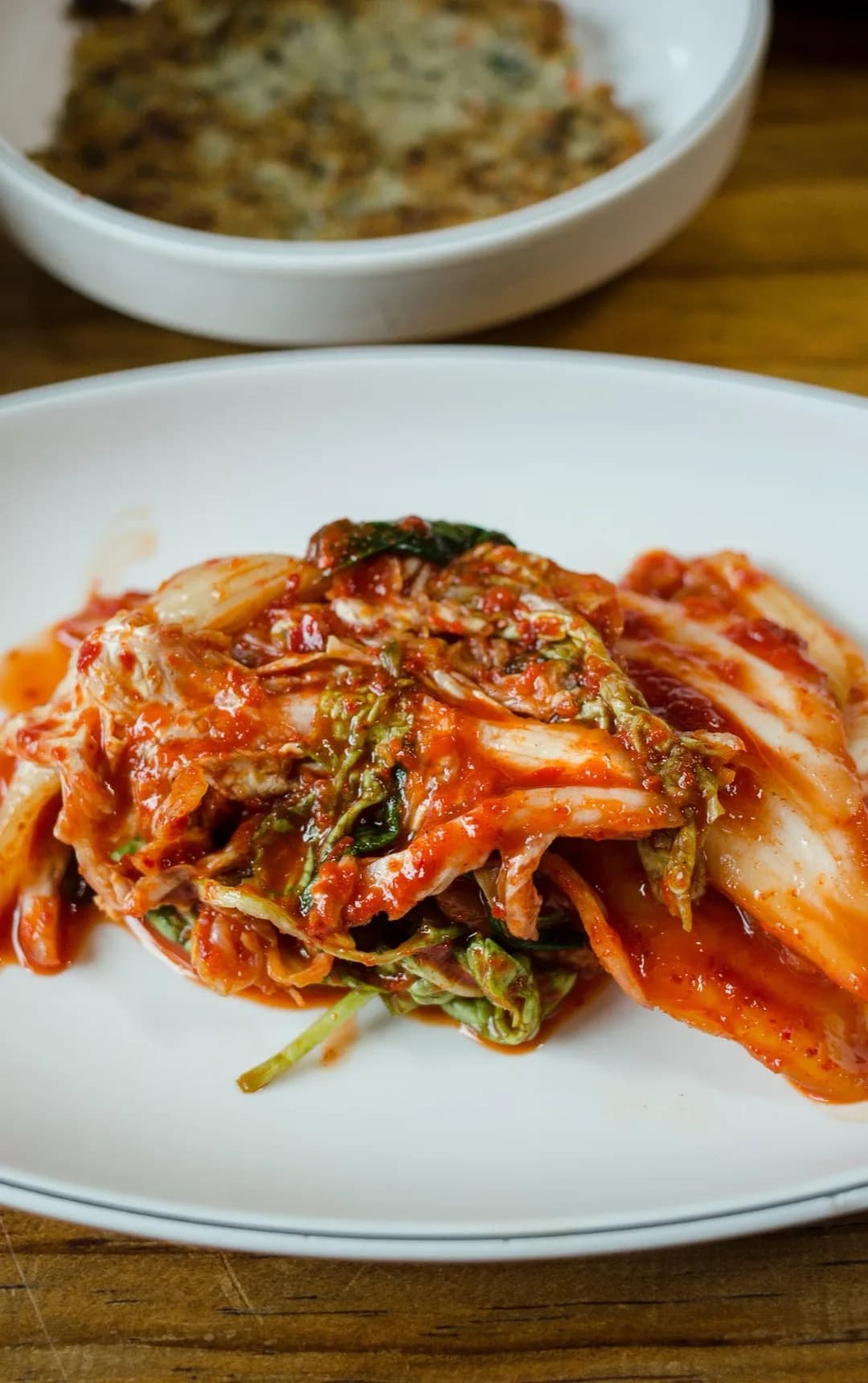
반찬 (banchan) are the side dishes that come with any proper meal. Kimchi is almost always among them; the rest vary by restaurant, season and mood — seasoned spinach, braised potato, marinated bean sprouts, dried anchovies, pickled radish.
Three things visitors get wrong:
- They are included in the price of the main dish, not itemised.
- You can ask for more, at no charge, and it is normal to do so. The phrase is 더 주세요 (deo juseyo) — "more, please."
- They are not a course. They sit there for the whole meal, and you eat them alongside everything else rather than before it.
What you should not do is treat them as a free buffet and leave the main untouched. Beyond that, refills are expected.
The menu is grouped by cooking method
The character on the end of a dish name usually tells you the format:
- 구이 (gui) — grilled
- 볶음 (bokkeum) — stir-fried
- 찜 (jjim) — steamed or braised
- 탕 / 국 (tang / guk) — soup
- 찌개 (jjigae) — stew, thicker and saltier than a guk, shared from the pot
- 무침 (muchim) — raw or blanched and dressed
- 전 (jeon) — a savoury pancake
If you know you want something dry and grilled rather than something hot and soupy, that is one glance at the suffixes, not forty dish translations.
Some dishes cannot be ordered for one person
Stews and barbecue are frequently sold with a two-portion minimum — 2인분 (i-inbun), two servings — because the pot or the grill does not make sense for one. This is not a snub, and it is often printed right next to the price.
Solo diners have a whole parallel world instead: 김밥 (gimbap) shops, 분식 (bunsik) snack places, 칼국수 (kalguksu) knife-cut noodles, and almost anything served as a 덮밥 (deopbap) rice bowl. There is more on eating by yourself in our guide for travellers.
The stock nobody prints
Korean soups and stews are very frequently built on 멸치 육수 (myeolchi yuksu) — a broth of dried anchovies and kelp, simmered and strained out before anything else goes in. It is invisible by the time the dish reaches you.
This is why a vegetable stew is frequently not vegetarian, and it is the single most useful thing to ask about.
Two more that catch people:
- Kimchi usually contains 젓갈 (jeotgal) — salted fermented seafood, often shrimp or anchovy sauce. Cabbage kimchi is rarely vegan.
- Gochujang, the fermented chilli paste, is typically made with glutinous rice and a barley or wheat malt, so it is not a wheat-free ingredient.
Anyone who has met dashi in Japan will recognise the pattern exactly — vegetarian at a Japanese restaurant covers the same problem in its more famous form.
The word worth knowing on the other side is 사찰음식 (sachal eumsik) — Buddhist temple cuisine, cooked without meat, without seafood stock, and traditionally without garlic, onion or spring onion either. It is a real category with real restaurants, not an accommodation. If your reason for avoiding animal products is a firm one, that is the plan rather than the fallback — see for dietary needs.
Ordering rhythm
Korean meals are shared and largely simultaneous. You order the main event — the grill, the stew, the noodles — and the table fills in around it. Rice arrives in its own small bowl per person, and it is the thing you eat the banchan with.
At a barbecue table, the staff will often cut and turn the meat for you. Letting them is not laziness; it is how it works.
Where TableSage fits
TableSage reads a photographed Korean menu, flags the things that were never written down — the anchovy stock, the jeotgal in the kimchi — and narrows the page to the dishes that match the tastes you set up beforehand. More on how that matching works in taste profile and hidden ingredients.
It never calls a dish safe. Recipes vary between kitchens and change without notice, so the staff have the final word — but you will know which question is worth asking.