A taquería in Mexico City at ten at night. There is no menu — there is a board with eight words on it, all of them cuts of meat you have not heard of, and a row of squeeze bottles and bowls on the counter that nobody has explained.
The eight words are a decision. The bowls are a much bigger one.
Antojitos and platos fuertes are two different meals
Most sit-down menus split along this line, and the split is the most useful thing on the page:
- Antojitos — literally "little cravings." Tacos, quesadillas, sopes, tlacoyos, huaraches, gorditas. Street-food formats, ordered by the piece.
- Platos fuertes — the full plate, usually with rice and beans alongside. Moles, adobos, grilled meat and fish.
A meal of four antojitos is completely normal and not a starter. What is not normal is ordering a plato fuerte each and then wondering why nobody finished.
Some other headings worth recognising: caldos and sopas are soups, guisados are the stews sitting in pots at a market stall — you point at them — and tortas are sandwiches on a bread roll, not a small cake.
The salsas are the seasoning, and colour tells you nothing
The dish arrives essentially unseasoned by heat. The salsa is where the heat lives, and adding it is your job, not the kitchen's.
What you cannot do is predict heat from appearance. Green tomatillo salsa is not reliably milder than red. A pale, oily-looking one may be salsa macha, made with dried chillies and nuts, which is often the hottest thing on the table. In the Yucatán, the innocuous orange one beside the cochinita is habanero.
The question is "¿pica mucho?" — is it very hot? It is a normal question, asked by Mexicans, and the answer is usually honest.
Two related notes:
- Chipotle in adobo adds real heat and smoke to sauces that read as mild on a menu.
- Coriander is scattered over a great many finished dishes. If it tastes soapy to you — which is genetic rather than fussy, as we covered in why am I a picky eater — "sin cilantro" is understood everywhere and nobody minds.
The lard, and the other things not on the menu
Manteca — pork lard — is in traditional refried beans, in tamale masa, in a lot of flour tortillas, and in many stews. It is the reason the beans taste that good, and it is on no menu anywhere.
- Chicken stock is standard in Mexican red rice and in many bean and vegetable dishes.
- Corn tortillas are usually just nixtamalised corn, water and lime, which makes them the more predictable choice of the two.
- Queso fresco and crema are added at the end as a default topping, so they frequently go unmentioned in the description.
For the full version, see vegetarian at a Mexican restaurant.
Ordering tacos
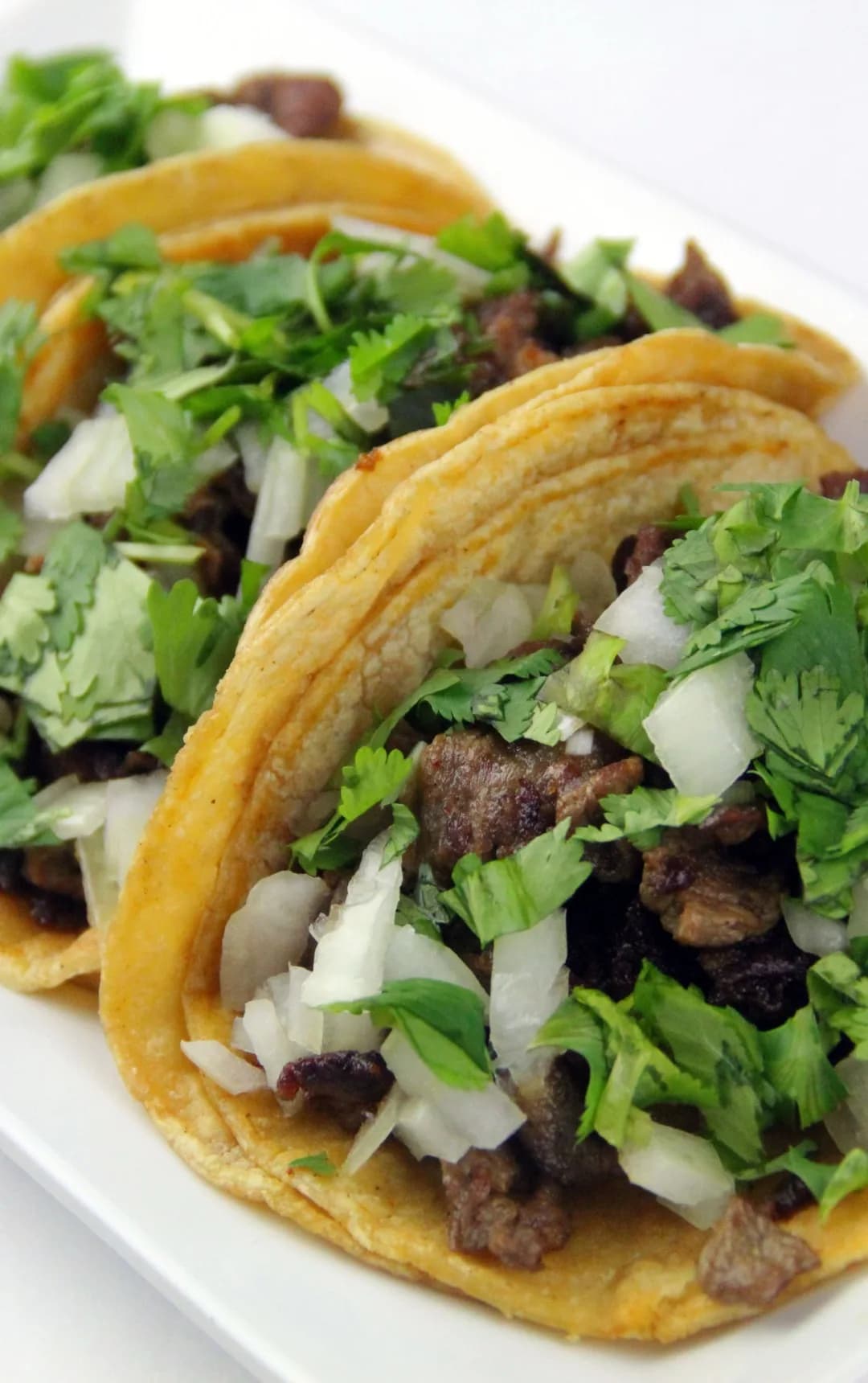
Tacos are named by their filling, and the filling is the only decision. A few that behave predictably: carnitas is slow-cooked pork and carries no chilli heat of its own; al pastor is marinated pork carved off a vertical spit, a direct descendant of Lebanese shawarma brought by immigrants to Puebla; pollo and bistec are what they sound like. Lengua, cabeza, tripa and suadero are offal and less familiar cuts, and are worth knowing before you point rather than after.
They come two small tortillas deep, with onion and coriander, and you add lime and salsa. Three or four is a meal.
One small warning about quesadillas
In Mexico City, a quesadilla does not automatically contain cheese. You have to ask for it — "con queso" — and this is a subject on which the rest of the country and the capital have never agreed. It is a genuine local quirk rather than a joke at your expense, and it catches out Mexicans from other states too.
More gentle-end suggestions are in what to order at a Mexican restaurant as a picky eater.
Where TableSage fits
TableSage reads a photographed menu and flags what is likely in each dish — including the lard in the beans and the stock in the rice — then narrows the page to the dishes that suit the tastes you set up beforehand.
It never calls a dish safe. Recipes vary from kitchen to kitchen and change without notice, so the staff have the final word — but you will know which question is worth asking.