Thai food has a reputation for being aggressively spicy, aggressively fishy, or both. Some of it is. Most of it isn't, and the parts that are tend to be predictable once you know where they hide.
Start by eliminating sections, not dishes
A Thai menu is usually grouped by preparation. That grouping does most of the work for you:
- Curries — coconut-based, generally the mildest route in
- Stir-fries — the most controllable; heat is usually adjustable
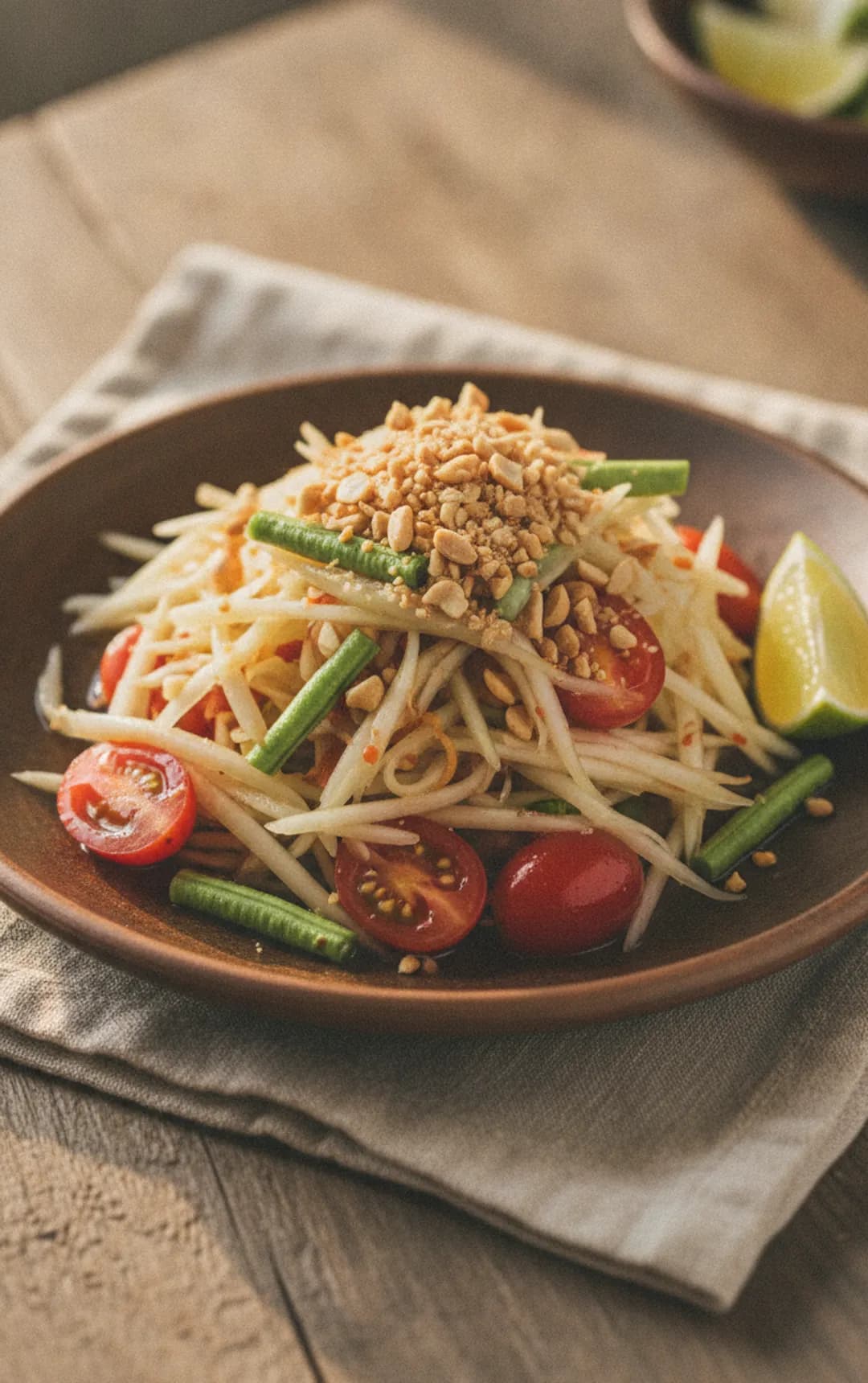
- Salads (yam / som tam) — the spiciest section by a wide margin
- Noodles — mild by default, sauces vary
- Soups (tom yum / tom kha) — sour and aromatic, often very hot
If heat is your problem, you have just removed the salads and most soups without reading a single dish name.
The three ingredients that catch people out
None of these are usually printed:
- Fish sauce (nam pla) — in almost everything savoury, including dishes presented as vegetarian. This is the single most common surprise.
- Shrimp paste (kapi) — in many curry pastes, including some green and red curries.
- Peanuts — in satay obviously, but also in som tam and as a garnish on several noodle dishes.
"Vegetarian" on a Thai menu frequently means "no meat," not "no fish sauce." It is worth one question.
Reliable starting points
- Pad see ew — wide noodles, soy-based, almost never spicy
- Massaman curry — the mildest curry on most menus, closer to a stew
- Chicken satay — grilled, familiar, peanut sauce served separately
- Khao pad — fried rice, endlessly adjustable
If you want to stretch slightly
Pad kra pao (holy basil stir-fry) is peppery rather than chilli-hot in many kitchens, and it is one of the most-ordered dishes in Thailand for a reason. Ask for it mai phet (not spicy) and it becomes very approachable.
What TableSage does here
Point it at the menu and it reads every dish, including the fish sauce and shrimp paste the menu never mentions, then shows you which items fit the tastes you set up. It never calls anything safe — recipes vary between kitchens, so the staff have the final word — but you will know which two questions are worth asking.