You are at a shophouse table in Chiang Mai. The menu is a laminated sheet with about ninety items on it, half of them transliterated into English in a spelling you have never seen, and a waitress is standing there with a pad. Somewhere on that sheet is the dish you would love. There is also the one that will end your evening.
Sorting one from the other is not a language problem. It is a structure problem.
The sections tell you more than the dish names do
Thai menus are grouped by cooking method, and the grouping is the fastest filter you have:
- แกง (gaeng) — curries. Coconut-based ones are generally the gentlest route in, though the heat lives in the paste rather than the sauce.
- ผัด (pad) — stir-fries. The most controllable section on the page; heat is usually adjustable on request.
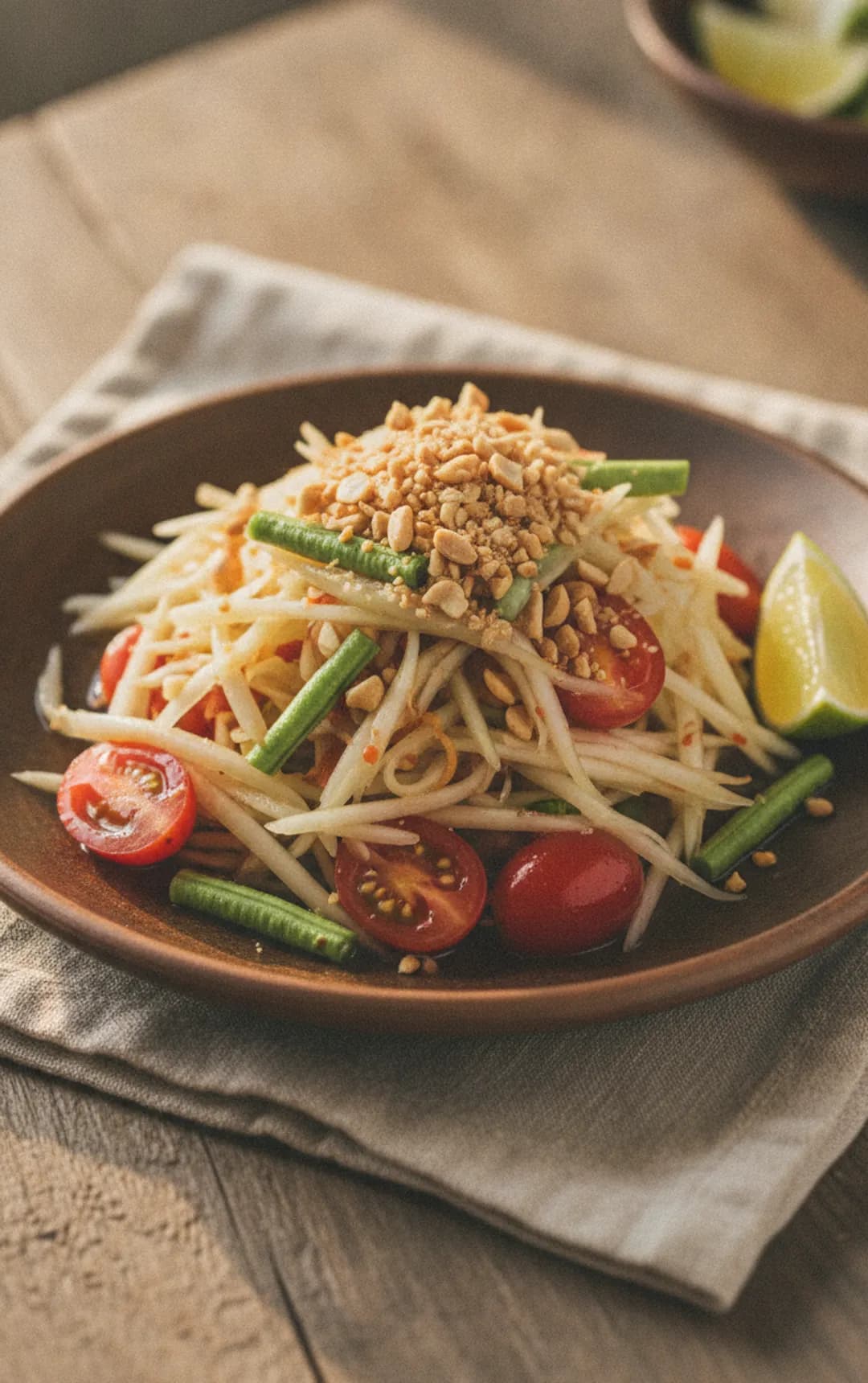
- ยำ / ส้มตำ (yam / som tam) — salads. The spiciest section by a wide margin, and usually the fishiest. If you are heat-averse, skip the whole section without reading a single item.
- เส้น (sen) — noodles. Mild by default. The sauce is the variable.
- ต้ม (tom) — soups. Tom yum is hot; tom kha is softened with coconut.
That is five decisions instead of ninety.
Mai phet is the phrase, and it is not a magic word
ไม่เผ็ด (mai phet) means "not spicy." It is the single most useful thing you can say in a Thai restaurant, and every kitchen understands it.
It is also relative. A dish made mai phet in a tourist restaurant and the same dish made mai phet at a market stall in Isan are not the same dish. เผ็ดนิดหน่อย (phet nit noi) — "a little spicy" — is the more honest middle setting if you want some heat but not a contest.
One more transliteration warning: the same dish appears on menus as pad kra pao, phat kaphrao and pad krapow. Thai script has no spaces between words, so even a reader who knows the alphabet has trouble finding where one dish name ends. There is more on that in how to read a Thai menu.
The ingredient on almost every plate and almost no menu
Fish sauce (น้ำปลา, nam pla) is in nearly every savoury Thai dish. Not as a flavour note — as salt. A Thai kitchen does not think of it as an ingredient any more than an Italian kitchen thinks of salt as an ingredient, which is precisely why it is never printed.
Two more that hide in plain sight:
- Shrimp paste (กะปิ, kapi) is in a great many curry pastes, green and red included, and in most som tam. A curry with no visible seafood frequently started with shellfish.
- Oyster sauce is the default seasoning for stir-fried greens — which is exactly what a vegetarian orders.
- Peanuts turn up beyond satay: in som tam, in pad thai, and as a garnish scattered on at the end, after the description was written.
Jay is a much stronger signal than "vegetarian"
เจ (jay) is strict vegetarian in the Buddhist sense: no meat, no fish sauce, no egg, and traditionally no alliums either. It is a whole category, not a preference — during the annual vegetarian festival, stalls fly yellow flags with the red เจ character on them, and jay food shops operate year-round in most cities.
"Vegetarian" in English is frequently interpreted as "no large pieces of meat." Asking whether a dish can be made jay is a completely normal question with a clear answer. Asking whether it is vegetarian often is not. The vegetarian Thai guide goes through the rest.
Small things that make the meal better
- Thai meals are shared. Dishes arrive when they are ready, not in courses, and ordering three things for two people is normal.
- The caddy of four seasonings on the table — chillies in fish sauce, dried chilli, sugar, chillies in vinegar — is for noodle dishes. It is there because you are expected to season your own bowl, not because the kitchen forgot.
- At a ข้าวแกง (khao gaeng) rice-and-curry shop, the food is already cooked and sitting in trays. You point. No menu, no reading, no waiting.
Where TableSage fits
TableSage reads a photographed Thai menu and flags the things that were never printed — the fish sauce, the shrimp paste in the curry paste, the peanuts in the garnish — then narrows the page to the dishes that suit the tastes you set up. There is more on that in hidden ingredients and what to order as a picky eater.
It never calls a dish safe. Recipes vary between kitchens and change without notice, so the staff have the final word — but you will know which two questions are worth asking.